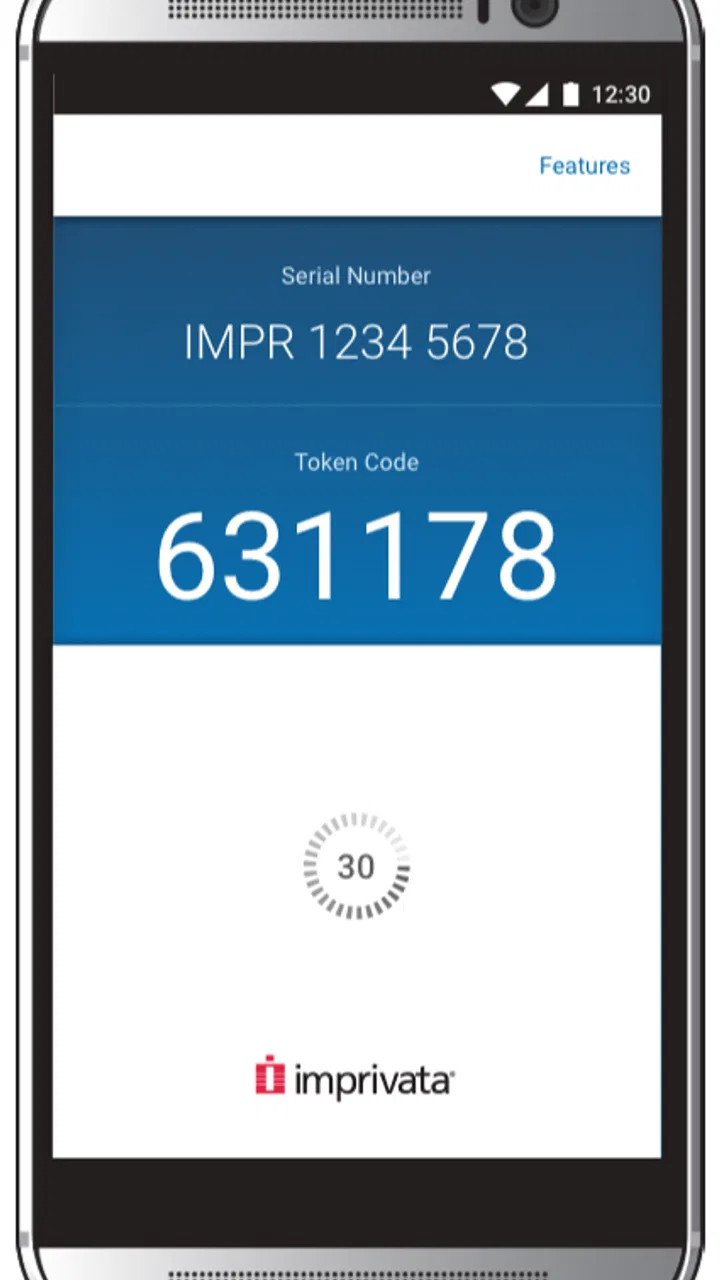
Imprivata ID
- 3.0
- Rating
- 500.00K
- Installs
- Free
- Price

 Analysis by App-foxy
Imprivata ID is the kind of medical app I would judge less by visual polish and more by what happens when a clinician is already busy. Its purpose is to support secure authentication and make access to clinical systems less disruptive, so the real test is not whether it feels exciting on a quiet day. The real test is whether it helps a professional get through a login step without creating another problem.
After using it as a focused authentication tool, I came away with a clear impression: this is built for organizations that already use Imprivata’s clinical access environment, not for someone looking for a general-purpose password manager or a standalone security app. That distinction matters. Imprivata ID is useful when it is part of a wider hospital or healthcare workflow; outside that setting, there is little reason to install it.
The app is free to download and is rated for Everyone, while its medical focus is aimed at professional use rather than patient self-care. Imprivata, Inc. develops it, and the app has been available since May 27, 2016. Its current version is 2026.1.1.144, and it requires Android 6.0 or later. Those details make it accessible to a broad range of Android devices, although access to the related clinical service is the factor that determines whether the app is actually useful.
You May Also Like

 Blood Strike: 2.5 Anniversary
Blood Strike’s Loadouts Turn Every Drop Into a Tactical Gamble
A close look at Blood Strike’s custom loadouts: how fast access to signature weapons reshapes its battle royale rhythm, rewards preparation, and narrows the gap between fights.

 Pandora - Music & Podcasts
Pandora’s Music Is Easy to Start, but Harder to Recover
Pandora’s strength is its low-effort path from a seed to a station. Its weak spot is how much confidence it asks you to place in connection, setup, and quiet recovery.

 8 Ball Pool
 Is Built on Rivalries, Rematches, and Routine
A close look at the rivalries, rematches, shared routines, and unanswered safety questions that turn a quick pool match into a persistent mobile community.

 Samsung Music
’s Quiet Strength Is Playing What You Already Own
Its reach comes less from spectacle than from dependable access to a personal library. That simplicity is both the app’s strongest retention engine and its ceiling.

 AccuWeather: Weather Radar
AccuWeather Review: A Quick, Clear Forecast for Everyday Decisions
For everyday plans, the best forecast is the one you can understand quickly. AccuWeather makes rain timing, radar, and local conditions easy to act on, with a few trade-offs.

 Hill Climb Racing
Why Hill Climb Racing Still Turns Crashes Into One More Run
A tiny car, a bumpy hill and one more upgrade: Hill Climb Racing keeps resurfacing because its simple chaos makes every near-miss feel personal.
More From Our News Desk



Where users are most likely to get stuck
The first point of friction is understanding what the app can and cannot do by itself. Installing Imprivata ID does not automatically give a person access to a hospital record system, workstation, or clinical application. It is an authentication component. In practical terms, your employer or healthcare organization normally needs to have configured the surrounding service and associated your account with it.
That is why a user can open the app and still be unable to complete a sign-in. The problem may not be the phone at all. The account may not be enrolled, the organization may require a particular activation process, or the service being accessed may not be connected to the app yet. I would check that relationship before repeatedly reinstalling the application.
A second common obstacle is expecting the app to replace every other sign-in method. In a clinical environment, authentication can involve several connected pieces: an account, an organizational policy, a workstation or service, and the phone itself. If one of those pieces is missing, the app may appear unresponsive even though it is behaving normally.
There is also a human-factors issue. Medical professionals often use authentication while moving between rooms, changing devices, or responding to urgent work. A phone that is locked, offline, low on battery, or configured with restrictions can turn a quick confirmation into a delay. I found that the app makes more sense when treated as one step in a controlled workflow rather than as an independent utility that should solve access problems on its own.
The average rating is 3.0 from around 500 ratings, with over 200 written reviews. I would read that as a sign to set realistic expectations rather than as a simple verdict on the software. Authentication apps are heavily affected by employer configuration, device conditions, and the systems they connect to. A frustrating review may reflect a complete login chain, not only the mobile application.
What to check before blaming the app
If the app opens but a sign-in does not finish, I would first confirm that the phone is connected to the internet and that the device has enough battery for the task. I would also make sure the phone’s date and time are set correctly. Incorrect time settings can interfere with security processes in many authentication workflows, so this is a quick, sensible check before escalating the issue.
Next, I would confirm that I am using the same account and phone that were registered by the organization. A replacement phone, a restored backup, or a change of work account can leave the app installed but no longer aligned with the expected enrollment. In that situation, clearing data over and over is unlikely to help; the organization’s support team may need to reconnect the account.
I would also avoid testing only in the exact place where the failure occurred. If the issue happened at a workstation, I would try to establish whether the phone can communicate normally elsewhere, without repeatedly submitting sign-in attempts. This separates a general device problem from a problem tied to one computer, one clinical service, or one account.
Another useful check is the app version. The current release is 2026.1.1.144, so keeping the installation current is reasonable, especially when an organization has updated its connected systems. I would not assume that an update alone will repair enrollment, but it removes one avoidable source of incompatibility.
Storage and operating-system age deserve attention too. The minimum Android requirement is 6.0, which covers many older devices, but an Android phone can still behave poorly because of manufacturer-specific battery controls, outdated system components, or aggressive background restrictions. If notifications or approval prompts are delayed, I would inspect the phone’s battery and notification settings without disabling security protections or changing organizational controls casually.
A setup approach that avoids unnecessary resets
For a first-time setup, I would begin with the organization’s instructions rather than launching the app and guessing. Keep the work account details available, use a reliable connection, and complete the process in one uninterrupted session if possible. In a hospital, it is tempting to begin enrollment between tasks, but an interruption can make it unclear whether the account was fully registered.
After installation, I would verify the result with a normal, low-pressure sign-in before relying on the app during a busy shift. That test should answer a practical question: does the phone recognize the expected authentication request from the work environment? If it does not, the next step should be checking enrollment with the organization, not trying random settings.
I would be especially careful when moving to a new phone. Keeping the application on the old device and installing it on the new one does not necessarily transfer the organization’s trust relationship. Treat a phone change as an account-management event. Ask the relevant support desk how the old device should be retired and the new one enrolled, rather than deleting the old installation immediately and losing useful information about the original setup.
The same caution applies after changing a phone’s security configuration. If a device has been reset, restored, or substantially modified, authentication behavior may change even though the app itself looks normal. A clean-looking home screen is not proof that the account connection remains valid.
Recovering a clinical workflow when authentication fails
When access fails during work, my preferred approach is to recover in a controlled order. First, stop repeating the attempt if the message or behavior clearly indicates an account or enrollment issue. Repeated retries can make it harder to tell whether the original problem was temporary, and they may create additional account-management work depending on the organization’s policies.
Then identify the exact point of failure. Did the app fail to open, fail to show the expected request, show a request that could not be completed, or complete the phone step while the workstation remained blocked? These are different situations. Describing the stage accurately gives support staff something useful to investigate.
If the app itself opens normally, I would check the phone connection and return to the sign-in screen once, without changing several settings at the same time. If the request never reaches the phone, I would focus on the connection between the work system and the account. If the phone responds but the workstation does not continue, I would record that distinction because it points away from a simple installation problem.
A realistic example is a nurse moving to a different workstation during a shift. The phone is in hand, the app is installed, and the first computer accepts the authentication step. At the next computer, nothing arrives. My first assumption would not be that the app suddenly stopped working. I would check whether the second workstation is connected to the same organizational service, whether the session is asking for a different account, and whether another colleague is seeing the same behavior. Those observations are more valuable than immediately reinstalling the app.
For a doctor working between clinical areas, the practical safeguard is to know the organization’s approved fallback process before an urgent situation occurs. That might involve contacting a service desk or using an authorized alternative workstation process. I would not recommend bypassing authentication, sharing credentials, or changing security settings simply to save time. The app exists in a sensitive environment, so convenience should not override the organization’s access rules.
One non-obvious lesson is that a successful phone interaction does not prove that the entire clinical workflow is healthy. The mobile step can work while the connected system is unavailable, misconfigured, or unable to complete the session. Treat the phone response as evidence about one part of the chain, not as a guarantee that every downstream service is ready.
Separating mobile trouble from service trouble
When troubleshooting, I would compare patterns rather than rely on one failed attempt. If several people using the same service encounter difficulty at the same time, the likely cause is broader than one phone. If only one device fails while others work, the device, account enrollment, or local settings deserve closer attention.
Location can also provide a clue. A failure that appears only at one workstation or in one part of a building may point to the local network or workstation configuration. A failure that follows the user everywhere is more consistent with the account or phone. These are not guarantees, but they are useful observations to include when reporting the problem.
I would note the approximate time, the device being used, the stage where the process stopped, and whether the app displayed a message. This is not busywork. Authentication support is much faster when the report explains what happened instead of simply saying that the app does not work.
It is also worth distinguishing an authentication failure from a clinical application failure. If the phone confirms the request and the workstation still shows an error inside the medical system, the correct support route may be the clinical application team rather than the mobile app team. Sending every issue to the wrong group creates delays for the user and the support staff.
Privacy matters during troubleshooting. I would avoid sending screenshots that expose patient information, account identifiers, or security codes unless the organization specifically provides a protected method and asks for them. A useful technical report should contain the error wording and context, not unnecessary sensitive content.
When a different option is better
Imprivata ID is not the right choice for someone who wants a personal password vault, a general two-factor authentication app for unrelated websites, or a way to access medical records independently of an employer. A conventional authenticator may be more appropriate for personal online accounts, while a password manager serves a different purpose entirely. Installing this app without an organization that supports it is unlikely to produce a useful result.
It may also be a poor fit for a workplace that does not use Imprivata’s authentication setup. In that case, the organization’s approved method matters more than the app’s general reputation. Healthcare teams should not choose an authentication tool based only on the fact that it is free or available in an app store; compatibility with existing clinical systems and support procedures is the deciding factor.
Even within a supported organization, some users may prefer a workflow that does not depend heavily on a personal phone, if an approved alternative exists. A phone can be forgotten, damaged, replaced, or restricted by battery-saving settings. That does not make the app inherently unsuitable, but it does mean the workplace should have a clear recovery path for lost access and device changes.
My main trade-off is straightforward: the app can reduce friction for a supported clinical workflow, but it also introduces another dependency. The phone must be available, the account must remain enrolled, and the connected service must be functioning. The benefit is most noticeable for professionals who authenticate frequently; it is much less compelling for occasional users who rarely access the relevant systems.
The app has reached over 500 thousand installs, which suggests that it is used beyond a tiny pilot audience. Still, adoption alone does not tell me whether it will work in a particular hospital. The organization’s deployment and support quality will shape the experience more than the download count.
My practical verdict for medical professionals
I would recommend Imprivata ID to a clinician or staff member whose organization explicitly uses it and provides enrollment instructions. In that context, it is a focused tool with a sensible purpose: helping secure authentication fit more smoothly into clinical work. I would install it from the approved source, complete enrollment before a busy shift, test it with a normal work sign-in, and learn the organization’s recovery procedure in advance.
I would not recommend installing it speculatively, using it as a replacement for a password manager, or assuming that a fresh installation can repair an account that has not been registered correctly. The most important preparation is not a hidden setting inside the app. It is knowing which team manages the account, what to do after changing phones, and how to recognize whether the failure occurred on the phone or in the connected clinical system.
My final opinion is cautiously positive. Imprivata ID is practical rather than versatile, and its value depends heavily on the environment around it. The 3.0 average means I would not present it as effortless for everyone, especially when setup and organizational configuration are involved. But for the right healthcare workplace, the app can be a useful part of a secure access routine. If your employer supports it, prepare the enrollment and fallback steps before you need them; if not, choose the authentication method your organization officially supports instead.
FAQs for Imprivata ID
01What is Imprivata ID and how does it work?
Imprivata ID is a mobile application designed to provide secure authentication through two-factor authentication (2FA). It enhances security by requiring users to verify their identity with their mobile devices in addition to their password. This app generates a unique code or sends a push notification to the user’s device, ensuring secure and convenient access to systems and applications.
02Is Imprivata ID compatible with both Android and iOS devices?
Yes, Imprivata ID is available for both Android and iOS devices. Users can download the app from the Google Play Store or Apple App Store. The app supports a wide range of devices, ensuring that most users can benefit from its secure authentication features regardless of their smartphone platform.
03How secure is Imprivata ID for protecting sensitive information?
Imprivata ID is highly secure, offering advanced two-factor authentication to protect sensitive information. It follows industry standards for encryption and secure data transmission, making it a reliable choice for organizations needing robust security measures. The app ensures that only authorized users gain access, significantly reducing the risk of data breaches.
04Can Imprivata ID be integrated with other applications?
Yes, Imprivata ID can be integrated with various applications and systems that require secure authentication. It is designed to work seamlessly with a range of enterprise applications, providing an added layer of security without disrupting user experience. Integration is straightforward, allowing organizations to enhance their security protocols easily.
05What should I do if I encounter issues with Imprivata ID?
If you experience any issues with Imprivata ID, you should first consult the app’s support documentation or FAQs on their official website. For further assistance, contacting Imprivata's customer support is recommended. They can provide guidance and troubleshooting tips to resolve any challenges you might face while using the app.
Pros
- Easy setup with clear instructions.
- Seamless integration with multiple platforms.
- Enhances security with two-factor authentication.
- User-friendly interface and navigation.
- Reliable performance with minimal downtime.
Cons
- Requires internet for functionality.
- Limited offline access features.
- No dark mode option available.
- Occasional delays in authentication.
- Not compatible with older devices.

Imprivata ID
Gallery